
PST Tank Upgrading
Water Tank Service
Pressed Steel Sectional Water Tank Upgrade
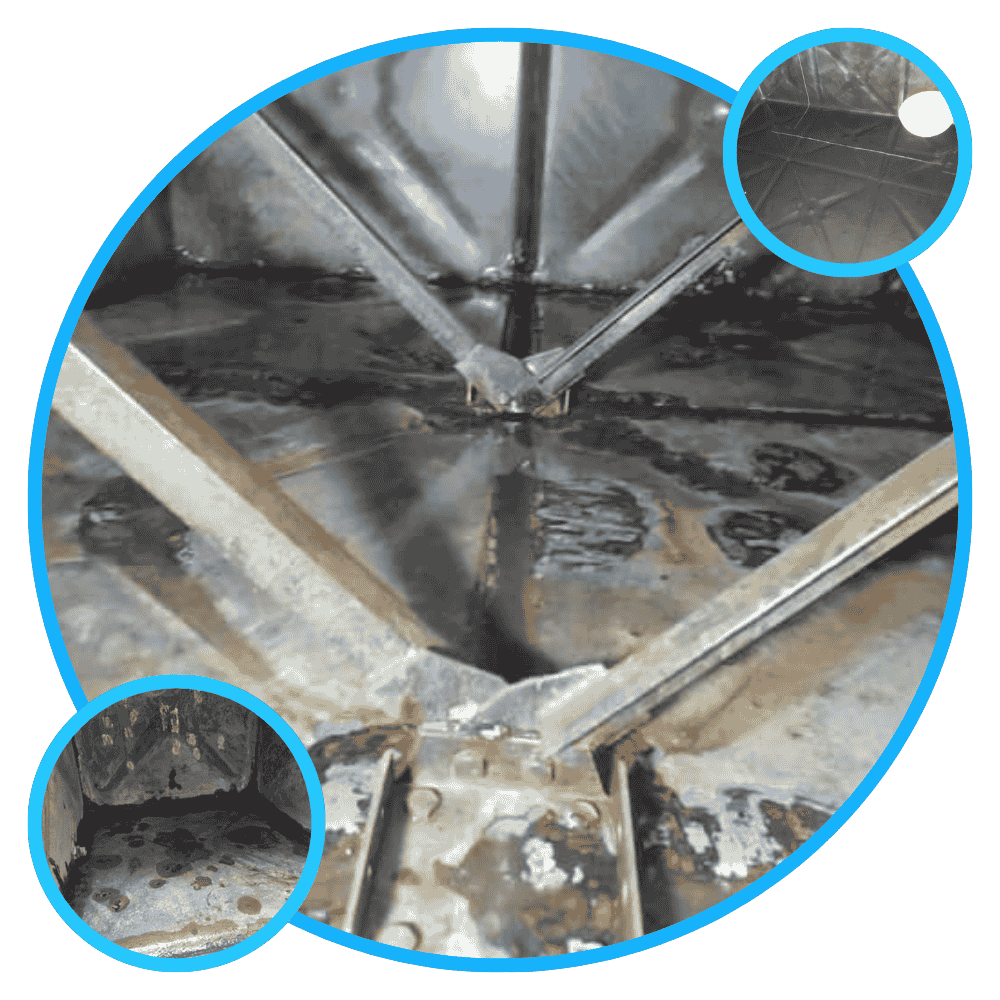
Pressed Steel Sectional (PST) tanks, typically made of galvanized or mild steel, tend to corrode over time due to chlorine exposure in the water. As corrosion worsens, rust builds up on the internal surfaces, making the tank unsuitable for storing clean, consumable water. Regular cleaning can improve water quality temporarily, but deeper upgrades are often required for long-term reliability.
While food-grade epoxy paint can be applied to slow down corrosion, it is not a lasting solution. The paint does not adhere well to common sealing materials like rubber foam, PU foam, or bitumen, which are used at the panel joints. Over time, the paint peels off, leaving the joints exposed and prone to rust again.
A more effective solution is to upgrade the tank with an HDPE membrane lining. This provides an added layer of protection for both the tank and the water stored inside. However, proper installation requires that the internal pipe terminations be flanged. If hose clips or non-flanged joints are used, leaks are likely to occur over time. That’s why we assess each tank’s condition thoroughly before recommending this upgrade.
FAQs
Frequently Asked Questions
The Pressed Steel Sectional (PST) tank represents a modular water storage system constructed from steel panels which workers assemble and secure at the installation site. The robust and long-lasting construction of this container makes it widely preferred for storing water along with various liquids including certain chemical substances and food-safe products.
PST tanks are also popular because they are long-lasting, strong, and easy to install. They are highly versatile, ranging widely in size, and have high performing results in adverse situations. Through galvanization processes these materials exhibit exceptional corrosion resistance properties. Their design suits them perfectly for various water types including potable water and industrial fluids.
You’ll find Pressed Steel Sectional (PST) tanks in a wide range of industries. In addition to manufacturing facilities and fire suppression systems, they are frequently found in hotels, hospitals, schools, and commercial buildings. They are perfect for both routine and urgent storage needs because of their strength and capacity.
Each has specific advantages. FRP tanks are fairly light in weight and possess good corrosion resistance, which suits them for some chemical or long-term storage services. Pressed steel tanks are more suited for high-load or high-pressure services since they are strong and stiff.
The process of upgrading PST tanks usually involves structural reinforcement combined with anti-corrosion measures and protective feature restoration. During the maintenance operations, internal and external types of coating are applied by the technicians along with the replacement of worn-out parts and the addition of linings to uplift the durability potential. Tanks' long-term safety, effectiveness, and regulatory compliance are guaranteed by the upgrading process.