
Water Tank Cleaning Services in Malaysia: Why Regular Cleaning Protects Your Water Supply
- November 25, 2025
- Water Tank, Water Tank Cleaning
Clean water starts at the source — and for many homes and buildings in Malaysia, that source is the water tank. Whether it’s a rooftop cistern, an underground reservoir, or a communal storage tank for a condominium, regular cleaning and maintenance are essential to keep your water safe, taste-free, and free from health hazards. This article explains why routine water tank cleaning is important, what can go wrong if you ignore it, what professional cleaning involves, and practical tips for building owners and homeowners in Malaysia.
Why water tank cleaning matters
Water tanks collect and store water over long periods, and even treated municipal water can accumulate problems once it sits in storage. Sediment, biofilm, algae, rust, mineral deposits, dead insects and small animals, and even microbial colonies can build up on tank floors and walls. Over time, these contaminants lead to:
- Reduced water quality and bad taste/odor. Organic matter and bacterial growth can produce unpleasant smells and tastes, making tap water unappealing or unusable for drinking.
- Health risks. Pathogenic bacteria, protozoa (such as Giardia), and other microorganisms can proliferate in neglected tanks, increasing the risk of gastrointestinal illnesses and skin infections.
- Clogged filters and appliances. Sediment and scale can block plumbing filters, strain pumps, and shorten the lifespan of water heaters and other appliances.
- Structural damage. Corrosion in metal tanks or deterioration of liners in plastic tanks can develop unnoticed, leading to leaks and costly repairs.
- Inefficient water treatment. If you use an in-house treatment system (e.g., reverse osmosis), poor upstream water quality forces the system to work harder and raises maintenance costs.
In short, a neglected water tank turns safe water into a potential problem. Regular cleaning is an affordable preventative strategy that protects health, preserves infrastructure, and maintains water’s taste and clarity.
How often should you clean your water tank?
There’s no one-size-fits-all schedule, but common professional recommendations are:
- Domestic rooftop or underground tanks: at least once every 6–12 months.
- Commercial or high-use tanks (restaurants, clinics, apartment blocks): every 3–6 months.
- Immediate cleaning is required following any contamination incident, including floods, major repairs, signs of foul odor or visible discoloration, or when animals fall into the tank.
Frequency depends on tank size, construction materials, water source, presence of filter, and environmental exposure (for example, tanks near trees or construction sites require more frequent attention).
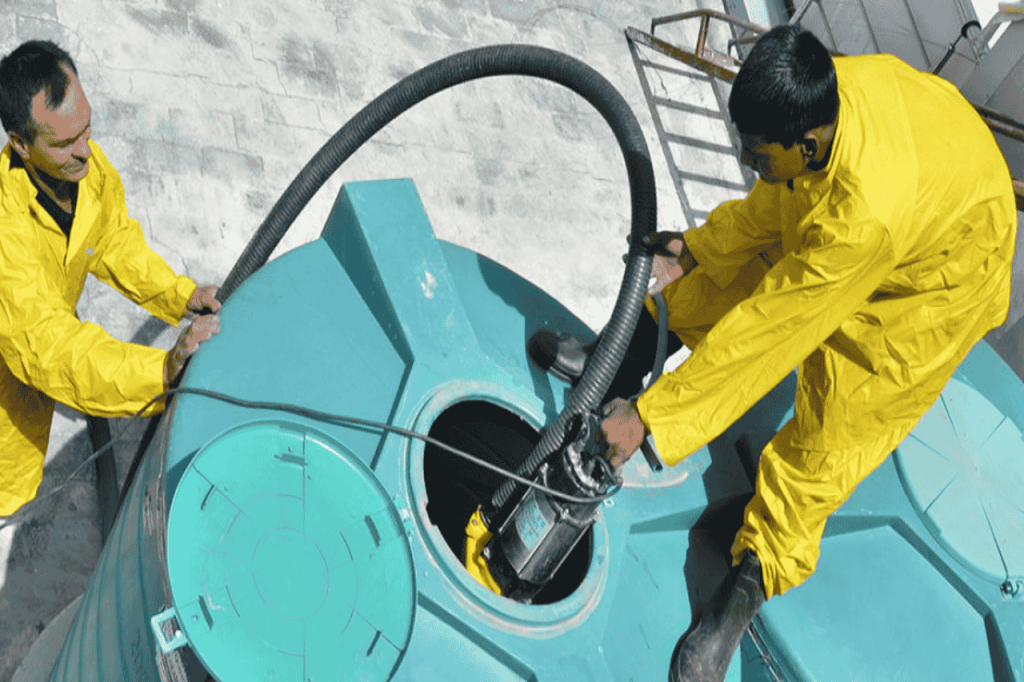
What does a professional cleaning involve?
A comprehensive professional water tank cleaning service typically includes the following steps:
- Inspection and risk assessment. Technicians inspect tank condition, inlet/outlet integrity, and any visible contamination to determine the cleaning approach.
- Drainage and removal of loose debris. The tank is drained; large debris and sludge are removed using manual scooping, vacuuming, or pumping.
- Mechanical scrubbing. Walls and floors are scrubbed to remove biofilm, algae, mineral scale, and rust flakes. For large tanks, high-pressure washing can be used in conjunction with careful water recovery.
- Disinfection. After physical cleaning, the tank is disinfected using an approved sanitizer (often chlorine-based) at the correct concentration and contact time to kill microbes.
- Rinsing and flushing. The tank is rinsed until disinfectant residues are reduced to safe levels, then refilled and flushed through the system.
- Testing and certification. Many reputable providers collect water samples before and after cleaning to confirm quality improvements; some also provide a service report or certificate of cleaning.
- Repair recommendations. If the inspection reveals damage—cracked seals, corroded fittings, broken inlet screens—the provider will advise on repairs or replacements.
Professionals follow safety practices to protect workers and occupants, such as confined space procedures, PPE, and ensuring no cross-contamination during cleaning.
Clean & Healthy Water Starts with Professional Water Tank Service
DIY vs Professional—when to call the experts
Small, well-maintained domestic tanks can sometimes be cleaned by confident homeowners using basic tools and a good safety checklist. However, consider a professional if:
- The tank is large, elevated, or in a confined/unsafe space.
- There are signs of biological contamination (strong odor, green/turbid water).
- You need official documentation for public health compliance (e.g., commercial premises).
- You lack the correct disinfectants or don’t know safe dosing and contact times.
- The tank material is specialist (stainless steel, fiberglass, coatings) and requires careful handling.
Professionals bring equipment (industrial vacuums and testing kits), trained staff, and insurance—essential for risk mitigation.
Choosing a water tank cleaning service in Malaysia
When selecting a provider, look for these qualities:
- Experience and references. Check past client reviews, and ask for references—especially for similar buildings or tank sizes.
- Transparent method and pricing. A reputable company should explain the steps, chemicals used, safety precautions and provide a clear quote.
- Testing and reporting. Prefer providers who include water sampling or at least visual and odor verification; ask if they issue a cleaning certificate.
- Safety and compliance. Ensure they follow confined space and occupational safety standards, and that their disinfectants are safe for potable water systems.
- Local knowledge. Providers familiar with Malaysian water quality issues and regulations will better tailor services to local needs.
Ask specific questions: Do they handle both concrete and plastic tanks? Do they clean inlets, overflow outlets, and screens? Will they dispose of sludge responsibly?

Cost considerations
Costs vary by tank size, access difficulty, contamination level, and whether testing is included. While a home tank cleaning is a modest expense compared with potential health risks and repair costs, get multiple quotes and verify what is included in each one. Beware unusually low offers that omit important steps such as disinfection or testing.
Small actions that make a big difference
Between professional cleanings, you can prolong tank cleanliness with simple habits:
- Keep inlet screens and lids secured to prevent debris and pests.
- Trim nearby tree branches and secure access points.
- Install a first-flush diverter or basic sediment pre-filter to reduce solids entering the tank.
- Monitor water clarity, smell, and taste — early detection is key.
- Log cleaning dates and service reports for future reference.
Conclusion
Regular water tank cleaning is an underrated but powerful way to protect your household or building’s water supply. In Malaysia’s tropical climate—where heat and humidity can accelerate microbial growth—scheduled maintenance is essential. The cost and effort of regular cleaning is small compared to the potential health risks, plumbing damage, and unpleasant surprises that arise from a neglected tank.
If you manage property or are responsible for building maintenance, treat tank cleaning as part of your essential maintenance calendar. For homeowners, a simple annual inspection and professional cleaning every 6–12 months will keep your water tasting fresh, running clear, and safe for everyone who uses it.